
AS WE FIND ourselves deep into the winter months, the skies above Prescott fill with the honks and high-arched V-formations of migratory waterfowl. Geese, iconic symbols of seasonal change, make their way across the state, pausing at key wetlands and reservoirs to rest and refuel.
Among them the greater white-fronted goose is a striking yet often overlooked visitor. Around Prescott, especially near the iconic Dells-surrounded waters of Watson Lake, it shares the stage with other goose species that birders delight in spotting during fall and winter.
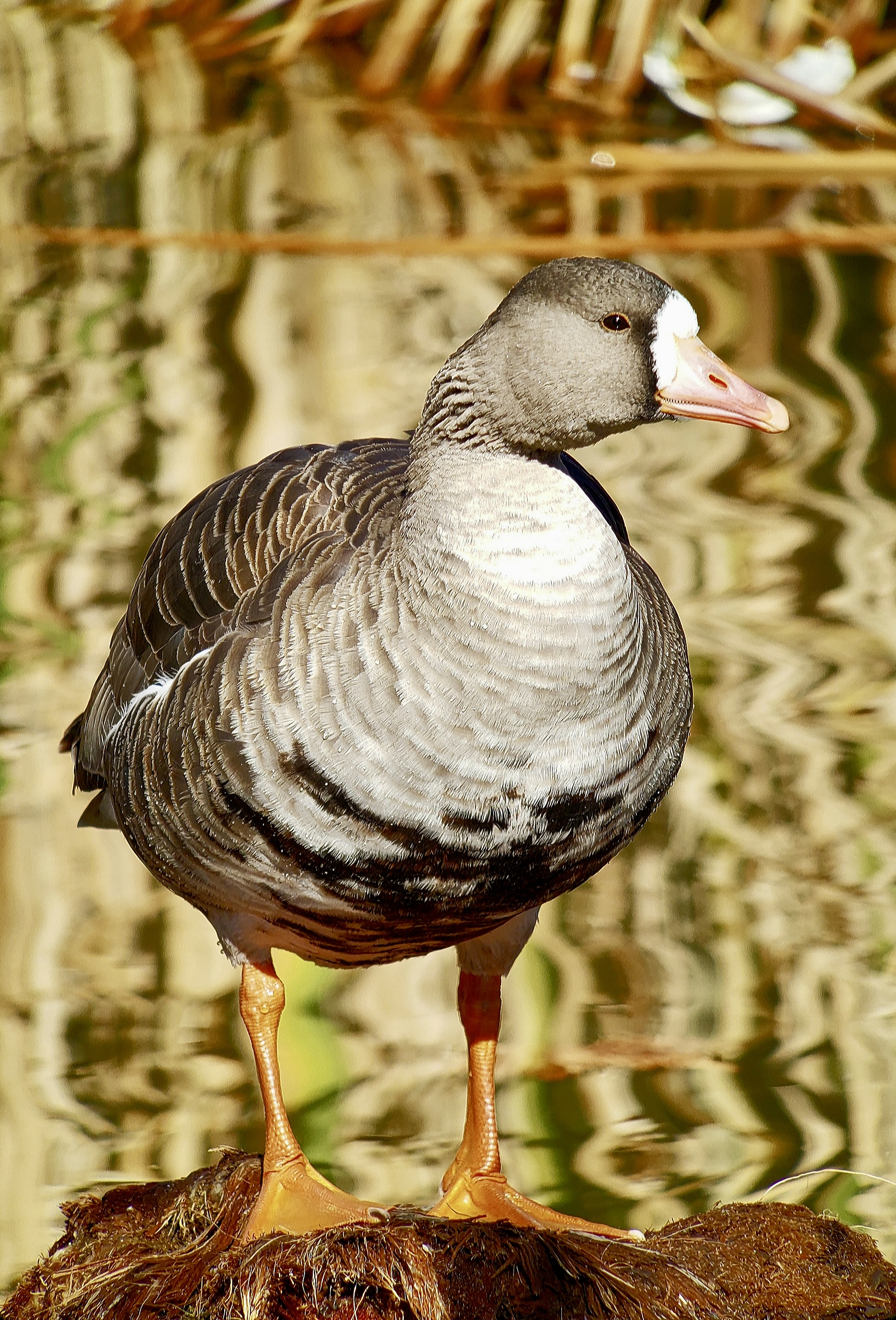
The greater white-fronted goose is a medium-large goose with a reputation for quiet elegance rather than flamboyant color. Its gray-brown body, conspicuous white band at the base of the bill, and orange legs make it a distinctive member of the waterfowl community when you know what to look for. On its belly you may see dark barring, which has earned the bird the nickname ‘specklebelly’ among birders. These geese are primarily winter visitors, typically seen from September through February, favoring marshes, fields and lakes where they forage on grasses, seeds and aquatic plants.
It’s important to be aware of a more common goose we can find year-round at Watson Lake specifically. The graylag goose, a non-native species, is visually very similar. Key differences include the white behind the bill and more abundant speckling on the belly. The latter feature is often hidden while the bird is in the water.
Although not nearly as numerous here as Canada geese, greater white-fronted geese do turn up on occasion at Prescott’s important birding lakes, and their presence is always a treat for local watchers.
Perhaps the best known goose in the region is the Canada goose. With a distinctive black head and neck and white cheek patch, these large geese are a constant in ponds, reservoirs, golf courses and riparian corridors around Prescott and across Arizona. Once primarily winter visitors, Canadas now have year-round resident populations that breed and nest on lake shores and urban waters.
Another striking visitor to Arizona during the winter months is the snow goose. These birds are famous for forming large, snowy flocks that can number in the tens of thousands, especially in wetter regions of the state such as the Lower Colorado River valley and agricultural fields near marshes. Their plumage is typically pure white with black wingtips visible in flight, though a less common ‘blue morph’ has darker body feathers and a white head.
While not nearly as common in the Prescott area as Canadas, snow geese do pass through or drop into larger lakes and fields during migration. In our area we typically see this species as singles or in small groups. Like the greater white-fronted goose they will often associate with Canada geese. To see them in their iconic large flocks, a winter trip to White Water Draw in Cochise County can give you the opportunity to see tens of thousands of this species, along with similarly large flocks of sandhill cranes.
Two other wintering or migrating geese occasionally found in Arizona and sometimes in the Prescott region are the Ross’ goose and the cackling goose.
Ross’ goose is the smallest of North America’s white-goose species. Entirely white with black wingtips like the snow goose, it is significantly smaller and usually mixes with flocks of larger geese. Here the Rosses are strictly winter visitors, often seen in late October through March in agricultural fields or wetlands, where they graze on grasses and sedges. They are very similar in appearance to the larger snow goose, but a smaller pinkish bill, shorter neck and rounder head are all reliable field marks to distinguish them.
Once lumped with Canada geese, the cackling goose is recognized as its own species as of a handful of years ago. Smaller, with a shorter neck and bill, it resembles a compact Canada goose and is typically seen in winter flocks alongside its larger cousins. While uncommon or accidental in Arizona, birders do report them in mixed flocks. They are similar in shape and size to the Ross’ goose and are the rarest of our wintering geese.
Prescott and its local waterways, most notably Watson and Willow lakes, are prime spots to scan for geese in the cooler months. Canada geese are the most consistent, year-round presence. During migration and winter (roughly October through March) watch the skies and fields for the sporadic snow geese, greater white-fronted geese, and occasional Ross’ or cackling goose, especially after a cold front or during peak migration times.
The seasonal presence of geese in Arizona is part of a much larger story. These birds make an incredible annual journey that connects distant Arctic breeding grounds with warmer wintering areas, and their stopovers provide birders in the Southwest with memorable encounters.
The Prescott Audubon Society is an official chapter of the National Audubon Society. Check it out online at PrescottAudubon.org.


