
I CAN'T IMAGINE living without stories. I need well crafted stories to enliven and enrich daily life. I have time now to dip into works of imagination that are rich with humanity and landscape. I read novels of all sorts and watch television series that keep me from too much self-absorption.
As my activities slow down, accounts of the lives of others, well told, keep me willing to accept my lot and care about the world utside myself. As I read, good stories make the gray days luminescent.
I majored in English in college, thinking I could read stories for my class assignments. I was surprised to learn that good stories are an art form, scrutinized by erudite scholars. So my college years were not joyful wanderings through good stories; they were times of struggle as I pored over lengthy literary studies that revealed the secrets of good writing. I barely understood those articles. My mother would mutter that college was wasted on the young, and I understand that now.
Not one of my college courses introduced me to interesting, entertaining reading. Instead I was forced to study theories. Deliver me from theories. If you want to ruin a good story like Madame Bovary, then take it apart and analyze it. Develop a theory explaining why that novel is a masterpiece, but don’t ask me to explain your theory.
Why is Huckleberry Finn a great American novel? Read it and decide, but don’t ask professors to analyze it for you or the story is spoiled. Mark Twain found Huck and Jim in his imagination and told their story. They live in our memories, or they don’t. That’s my literary theory.
For years I was an English teacher in high-school classrooms. My students couldn’t understand what makes great stories, nor could I tell them without resorting to those academic terms and explanations that drown us in words and leave Huck floating away on his raft. Instead my hope was to introduce them to such good stories that they’d become readers for life, but they resisted when I chose stories that didn’t touch their hearts.
For example, my students would argue that there was no good reason to read Vanity Fair, a 19th-century British classic novel. After all, there are no people around now like the diabolic Becky Sharp — or so they thought. No selfishness? No greed or deviousness? I had mistakenly thought these bright teenagers would enjoy reading the story of a poor English girl who rises to fortune using her charms and manipulation. I loved it, but my students didn’t.
I remember that classroom argument and how hopeless it was to persuade privileged young people that Becky is real, that she lives today. I also remember the boys who took our copies of Vanity Fair to the bookroom when we’d finished our study of it. Carrying the load of books, the boys left our classroom and never got to the proper shelves. I can see them still, confessing to me and laughing because they’d dumped Vanity Fair in a trash barrel. (I have to add that I didn’t have the heart to punish them, knowing it had been a poor choice and they’d learn about conniving, selfish girls on their own.)
The stories that captivate us need to touch us with a reality we understand even if we live in a different era and culture. The story must have a humanity that is so well written it reaches us over the centuries. Good stories make an imaginative connection to the reality of our lives, but they require a knowledge in us that comes of living a while. I admit here that the choice of novel I made in that classroom was mistaken.
Television stories are wonderful sources of enjoyment for me now. In addition to my reading, I’m lucky enough to have access to television movies and series that bring to life people who live in a variety of settings, like Scandinavia, New York City or rural poverty anywhere. My children think me a curmudgeon because I’ve watched Masterpiece Theater for years. Not only do I delight in those renderings of classic literature, but I like well done contemporary televised stories too. I enjoyed The Sopranos, a masterful series that included humor, sorrow, cruelty and love.
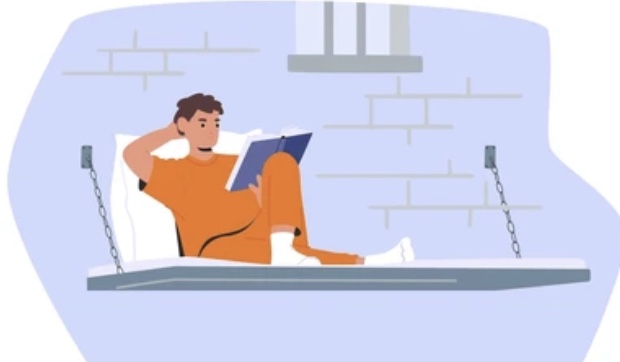
I read this week of a man who recently built his 500th prison library at a women’s correctional facility in Connecticut. He’d been in prison himself, and read books in solitary confinement — books smuggled to him by other inmates with a pulley system of torn sheets. “Books gave me a pathway into the world,” he said.
I contend that the best books in his prison libraries are full of meaningful stories.
Elaine Jordan, author of Mrs. Ogg Played the Harp, is a local editor who’s lived in Prescott for thirty years.


