
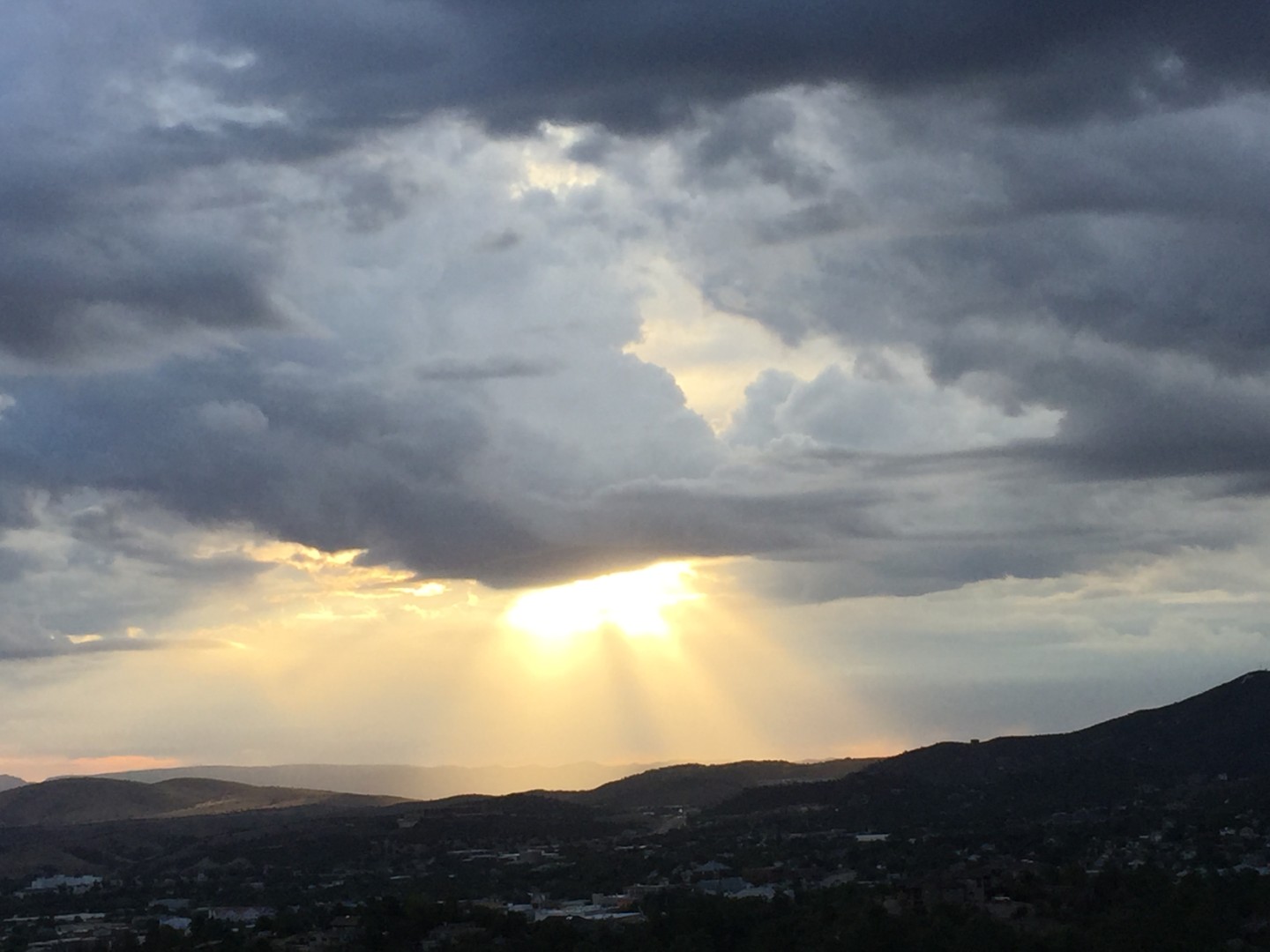
ARIZONA gives us the bounty of light. Even in winter, here in the north the days gleam with light. As my eyesight fades, I’ve learned to be grateful for the daylight through my windows, the sunlight on snow, and the indoor lights at night.
As I switch on lights this morning and adjust the blinds, the light pours into my room, a quiet place decorated with family photos. Now I can see to write, and the magic of Light wanders through my thoughts.
Light has come to symbolize everything good in the universe, a free blessing. If the darkness is sadness and emptiness, the light is plenty and gladness. Light illuminates our wide and open outdoors and our settled indoor world. If I were a poet, I’d better express the gratitude I feel.
Light comes for me when I find something beautiful — in a book, a face, a landscape. This morning I needed the artful drawings in the cartoon page in the newspaper so I could enjoy Peanuts and Pickles, which lift my spirits with lighthearted humor.
Light is a strong symbol in religion, representing the gift of inspiration from beyond our knowing. It’s called an armor in the Bible, a source of protection because it provides direction and belief. Like Grace, it’s a free gift available to us just by being alive. We don’t need to deserve the light; it makes no moral demands. It’s there in moments of insight, and in miracles of change — when health emerges, when an idea comes from nowhere, when help arrives.
Most of all, light represents Hope. Light streams through windows in churches and synagogues where it lifts spirits in need of hope. We are lost without hope. It keeps us moving, alive and undefeated. We might turn to those sacred window lights at times of loss or a darkened world. Hope, writes Emily Dickinson, “sings the tune without the words and never stops at all.” I think she sees hope as a wonder that emerges within us and stays, keeping us alive with unending promise.
People in my age group are especially vulnerable to a loss of hope. The light disappears for some, and they end their lives in suicide. Pain takes away the light for them, as does lack of care. I wish we had a culture where these problems were dealt with. A cousin who lives in Europe told me, “Our government takes care of the poor, homeless and sick. Isn’t that what government is for?” I couldn’t answer, but had some second thoughts about socialism.
We have to cling to hope when our leaders seem to be acting out of self-interest and destroying people’s lives and our treasures. I need the light of hope when those in power distort their call to serve, and the innocent are arrested, our history is distorted and laws ignored. We Americans live now, I think, in more darkness than I’ve known in my lifetime
What if we had leaders who sought answers to want and pain? What if we had leaders who paid attention to need and were led by a light of compassion? That kind of light is found in rare people. They seem to know where they must go to help and serve. They seem to have a light within.
Jon Meacham is such a person. He now serves as canon (advisor to the clergy) at the Washington National Cathedral, and seems to have a sense of where and how we can bring more light into the darkness. He has brilliant insights, and is reassuring and kind. I am restored to hope when I turn to people like Meacham.
Standing like a sentinel, a lighthouse guides us even now as we face disturbing news. It spreads light for lost travelers and represents hope in a stormy world where there are attacks on ships at sea, arrests of the innocent, and government careers in ruins. I believe enlightened people stand like that tall lighthouse with the will to help, to change what is cruel and wrong. They turn us from despair, even as words of hate and exclusion issue from some leaders. I know they live here in Arizona, where they serve our people, tend to our landscape, care for our animals, and turn our streets into lighted neighborhoods.
The Greek philosopher Diogenes wandered the world holding a lantern and looking for an honest man, he said. He carried the light, I think, because it would lead him toward goodness no matter how bleak and cruel the dark world around him was. We search, too, for the way out of darkness as we lift our blinds and open the curtains to bring in the daylight.
Elaine Jordan, author of Mrs. Ogg Played the Harp, is a local editor who’s lived in Prescott for thirty years.


