
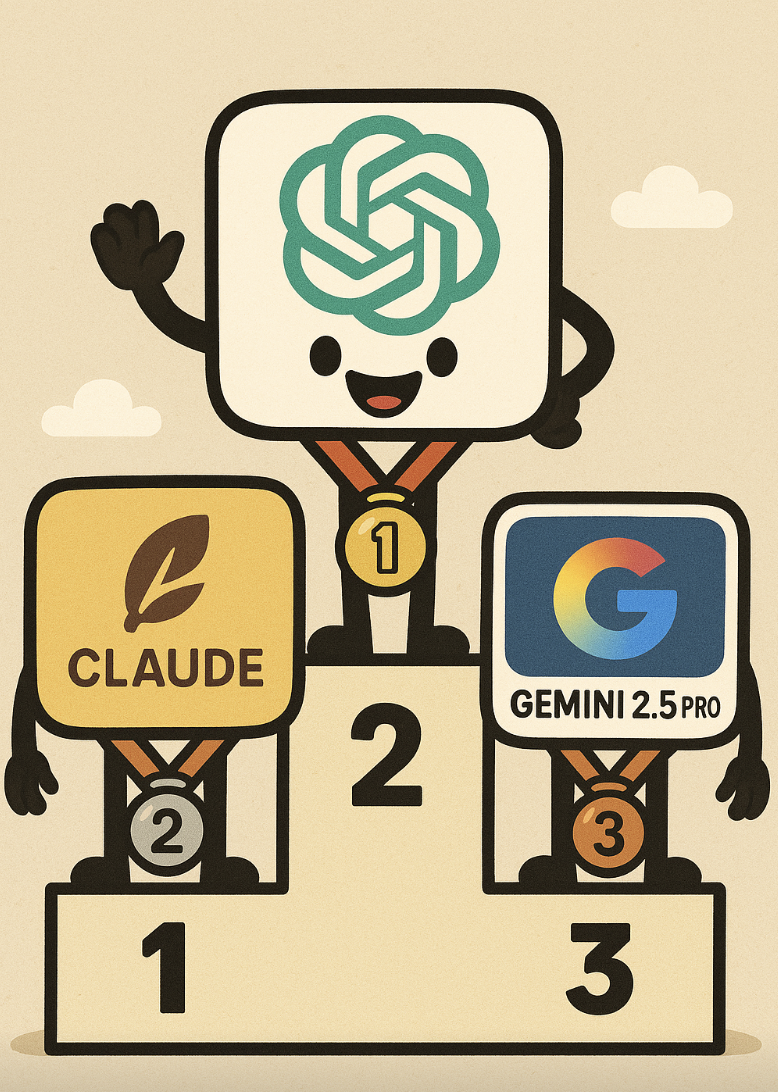
Not all AI models or large-language models are created equal, literally. Some were trained haphazardly by scraping anything and everything from the internet (ChatGPT); others were built more carefully using reliable and vetted materials and websites, and it shows. Moreover, how they respond to queries differs as well.
Those using these tools who are not programming professionals are often frustrated by their inability to find correct answers because they treat LLMs as if they’re search engines. They don’t work that way.
Queries must be made in great detail to get appropriate responses. The LLM must be told to use industry-vetted or academic, trustworthy sources, and cross-check them. Anything else can elicit random information worse than what we get from a Google search, because good Google results tend to rise to the top thanks to the algorithms.
Someone recently complained to me that Google’s AI Gemini gave them bad information and even had hallucinations. That’s quite possible because Google has one of the poorest free AI LLM systems. However, because amateurs like the “easiest” tools to use, a marketing study in August by Polymarket found that it’s still the most popular. Meanwhile, Gemini 2.5 Pro actually is one of the better models for professionals who pay for access.
Whether or not you’re paying to use an LLM can impact the quality of what you’re receiving. Recently OpenAI upgraded to ChatGPT 5, eliciting a backlash by amateur users that has dwarfed any other reaction I’ve seen. People hate it. They say they lost their friendly access to a familiar version that retained a memory of past interactions. Nonprofessionals say it’s slower, less creative, and lacks “personality.” It’s interesting that people want a tool to be something it wasn’t intended to be, but there you are. OpenAI had initially removed access to earlier models on its release, but paying customers still have access to the legacy models.
You actually get what you pay for with ChatGPT, because the company is focused on making money and throttles down access to freeloaders. Nonpaying users are likely to only get access to ChatGPT 4.1 mini or nano versions. The was bound to happen, because the cost of offering it for free are ludicrous.
For professionals, ChatGPT 5 is a tremendously better model, providing access to PhD-level research far faster than ever. An independent test of the various models in late August by Duke University rated it higher than any other LLM in completing a multitude of tasks. Claude gained second place and Gemini 2.5 Pro was third. If you want to read the highly technical abstract on the study for yourself, it’s called “LiveMCP-101: Stress Testing and Diagnosing MCP-Enabled Agents on Challenging Queries.”
One of my social-media friends recently asked how they could decide what LLM tool to use for work. I suggested trying them all out to decide, but someone else gave a useful response that I’m sharing here. Credit goes to social media friend Lauren Mitchell.
“Think of the three big AIs like friends: “ChatGPT = your bestie. She’s down for anything, helps with planning, brainstorming, feelings, business — total jack-of-all-trades.
“Claude = your quiet friend who writes Taylor Swift–level lyrics and secretly crushes code. She takes your messy rambling and instantly turns it into clean, organized notes, summaries, or even big-picture insights. Total powerhouse.
“Perplexity = the nerdy guy in the corner. He doesn’t talk unless you ask him, but when you do, he gives you straight facts, no fluff, no feelings. 100% reliable on data.
“That’s why they’re all useful for different things.”
Notice she didn’t mention Grok, also called xAI, which is one of the more popular LLMs. That’s because, unless you’re a fanboy of Elon Musk, you know that he’s manipulated its responses so that you can’t consider it reliable.
Anthropic, the company that created Claude, developed Sonnet as its LLM; Opus is the agentic AI that can do the heavy lifting in terms of “thinking” through a problem. Professionals tend to use Claude, which was trained in an ethical, reliable manner. It has a longer context window, enabling more in-depth research, and it generates computer code efficiently.
Meta’s Llama is not popular at all because it’s error-prone and fails in competing with the others in completing tasks.
Everyone has a different use for AI, but unless you’re using a tool customized for your purpose, you’re unlikely to do any better than ChatGPT if you’re taking advantage of free access.
Incredible AI Breakthroughs
From speeding up patient discharges in the UK to acting as a second, reliable source for breast-cancer screening to identifying deepfake videos with 98% accuracy, AI advances are announced almost daily. Those that are most immediately impactful tend to involve health care, which is in a pitiable state in this country, both for lack of access and impediments to the development of new medications and treatments.
I recently listened to a Radiolab podcast called “The Medical Matchmaking Machine,” in which a medical doctor, David Fajgenbaum, saved his own life by doing the research on his rare condition and finding an existing medication to treat it. Talk about “Physician, heal thyself!” He also saved his uncle’s life by finding another existing medication that could treat his angiosarcoma. He’s now working with an AI company using machine learning to develop a database of connections between existing drugs and conditions, making them potential treatments for an array of rare conditions, as well as diseases considered fatal or that have no cure.
Fajgenbaum is doing what the medical community has failed to do because of the complexities and politics of developing medication — he’s saving people, using AI. And he’s going to make it possible for people to save their own lives by making his system and algorithm available for other researchers and doctors to use. It’s an incredible story and it shows what the real value of AI technology can be if used for the good of humanity.
Journalist Toni Denis is a partner in Seeflection Inc.


