
HONEYBEES are fascinating. The Western honeybee (apis mellifera) is a domesticated insect, one of over 20,000 bee species worldwide. This species has been managed by humans for thousands of years. It is not native to the Americas, though native bees were kept and traded by Indigenous people. Apis mellifera were introduced to North America in the 1600s by European colonists, who brought European plants as well. Those bees thrived and multiplied so well that bee colonies preceded the American colonization of the west. Bees were carried across the Rockies by Mormon settlers and shipped to California during the Gold Rush.
Western honeybees are partners in our food production, pollinating over a third of all the food we eat. A bee visits about 1500 flowers each day to collect nectar, flying over 55,000 miles to gather a pound of honey. A single worker bee collects 1/2 tablespoon of honey in her short 40-day life span.
What is honey?
Honey begins as nectar, which is 80% water with a wide combination of simple and complex sugars and herbal elements provided by the flowers. Each bee gathers nectar from thousands of flowers and carries it back to the hive in a special stomach where digestive enzymes start breaking it down. In the hive this treated nectar is transferred to hive worker bees and they in turn dab it into the wax honeycomb cells for dehydrating. Hive bees fan their wings to evaporate 90% of the water, bringing the liquid to a supersaturated viscous solution of 18% water or less — that’s honey. The honey is then stored in the wax cells and capped for feeding and maintaining the hive. The honey is stable in this form and resists spoilage by bacteria, yeast and mold.
The Prescott Bee Club
I find it fascinating, and there’s much more to learn. In our area the Prescott Bee Club trains, supports and educates beekeepers. I talked with Braidy Boen, the club’s current president. PBC is the largest, most active bee club in the state, with almost ninety members and many volunteers.
They are into bees and beekeeping for a range of reasons, some for pollination and some for the honey. All are noncommercial backyard beekeepers, no one is in it for the money. He explained that the club is all about education. Members give talks and demonstrations in schools, at local events, to 4-H and at the Highlands Center, and they show off an attention-grabbing demonstration hive. One of the services they offer is relocation.
Bees move and build their populations by swarming. A new queen is created, then worker drones leave the hive and bunch up (swarm) around a the old queen while scouts head out in search of a new home; the swarm is very temporary. The new home could be inconvenient: your attic or your sprinkler box. The club lists several members who are experts at trapping swarms, along with cautionary directions on its website. You should know that swarms are not aggressive. They are in survival mode. Leave them alone and wait for help. Visit the club’s site (below) for bee-relocation services.
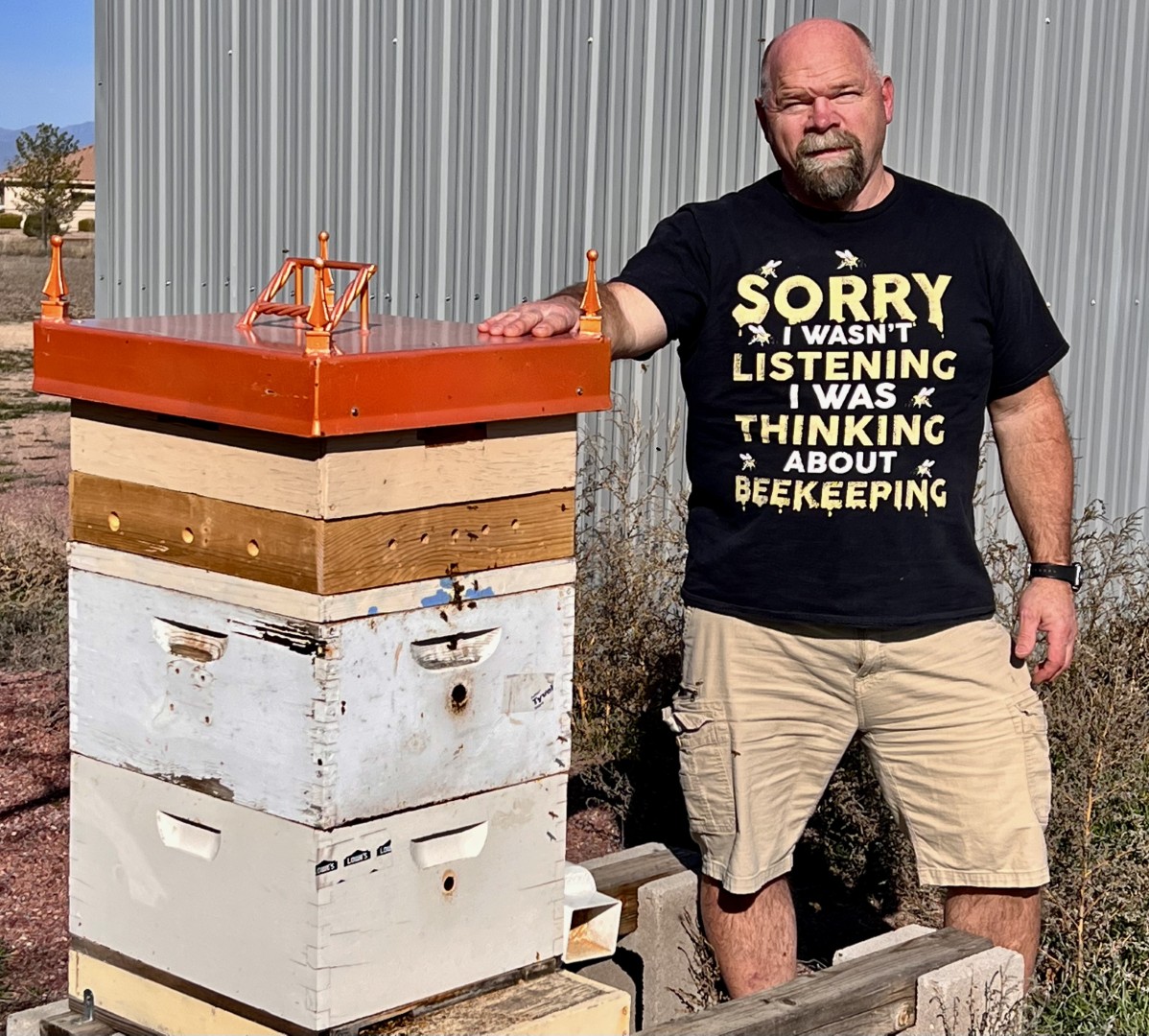
Braidy (who is listed on the relocation page) has been a beekeeper for 13 years and is fascinated by them. “When you have a tolerable colony of bees, you get totally taken into their vibe. It’s a very mellowing, therapeutic, almost spiritual situation, an enlightening experience.”
So get buzzing!
The Prescott Bee Club welcomes beekeepers at all levels with a supportive training and mentorship program and information for the curious. They will get you started with resources for equipment (like hive boxes), gear (bee suits) and bees.
PBC meets each month on the third Saturday at members homes for community-building potlucks, networking and education, usually with a guest speaker. You can join the club email list via PrescottBeeClub@gmail.com.
More: prescottbeekeepers.com
Chef Molly Beverly is Prescott's leading creative food activist and teacher. Photos by Gary Beverly.


