
For many of us birdwatching is more than a hobby, it’s a part of who we are. Like most pursuits it can be as casual or as committed as you want it to be. Some people are content watching sparrows and finches from their backyard feeders, while others travel the world chasing rare species across continents. What you put into it directly affects what you get out of it, but the beauty of birding is that it welcomes all levels of interest. The birds are out there, regardless of our attention, living their lives, mostly, and preferably in complete indifference to us.
When someone is curious about getting started, or when I suggest the hobby to someone I think may enjoy it, I always remind them that an upcoming trip is the perfect excuse to begin. Travel offers a change of scenery, and with it, new species to discover. Even if the hobby doesn’t stick, they’ll still have gained a new appreciation for the world around them, and maybe a few great stories along the way.
Recently my wife Alyssa went on a short cruise to Catalina Island and then down to Ensenada in Mexico before returning to Los Angeles. Alyssa isn’t exactly a novice, but she’s not a full-time birder either. She joins me on my outings from time to time and has a great eye for spotting movement in the brush. Over the years she’s picked up a fair bit of identification skill through osmosis. I even catch her now and then calling out birds in our backyard. I often suspect she enjoys it more than she lets on, but I digress!
Before her trip, I reminded her — only half-jokingly — to take her binoculars.
The first stop was Catalina Island, part of the Channel Islands chain off the Southern California coast. Surrounded by the cold Pacific, these islands are rich with marine life and pelagic birds that depend on the kelp forests for food and shelter. From the boat, Alyssa watched Western and Heermann’s gulls trailing the ship, and brown pelicans skimming low over the waves. Although they didn’t make it to nearby Santa Cruz Island, it’s worth noting that the island is home to the endemic island jay, a close relative of the Woodhouse’s scrub-jay that evolved in isolation over thousands of years. With only about 1,700 individuals in existence, it’s a tough bird to see, but one that rewards those who make the effort.
Then it was on to Mexico.
While Ensenada isn’t far from Los Angeles in distance, its more southern latitude and diverse habitats — coastal wetlands, dry scrub, and nearby forested hills — bring opportunities to see species not typically found farther north. For example, the spot-breasted oriole is common in the forests surrounding Ensenada, but has never been officially recorded in Arizona. It’s a bright, striking bird, similar to our hooded oriole, and would make an exciting addition to anyone’s life list.
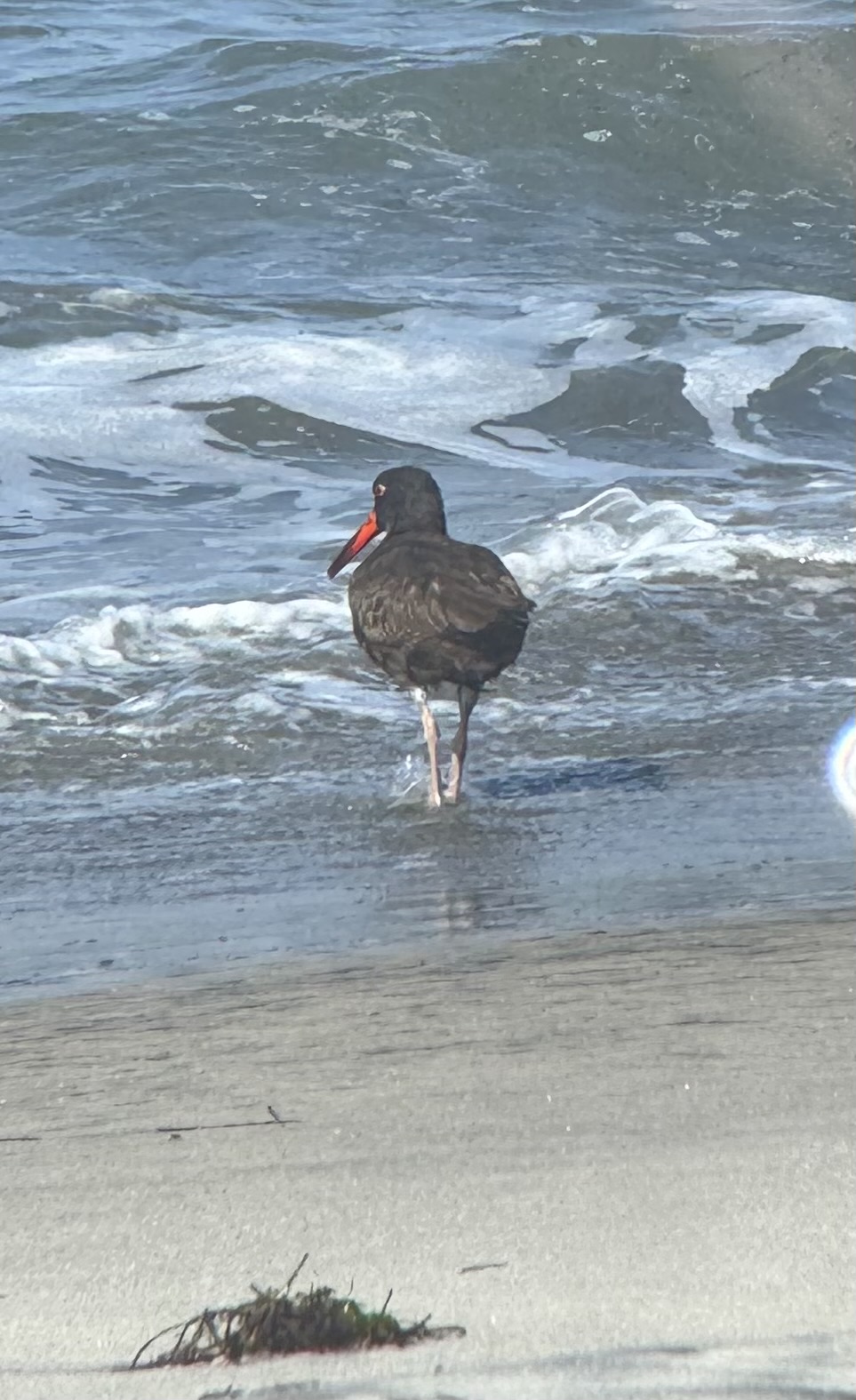
Alyssa and her mom spent most of their time along the coast, though, so the oriole would have to wait for another trip. Still, as she relaxed on the beach, margarita in hand, she casually spotted and identified some impressive birds: black oystercatcher, snowy egret, marbled godwit, even a willet. I’ve only seen a handful of the latter two species in my life, and just one oystercatcher. These birds are strictly coastal, rarely venturing inland. Of the two North American species in the genus Haematopus, the black oystercatcher stands out for its jet-black plumage, blazing orange bill, and ochre eye, in striking contrast with the pale sand and surf. They use their strong bills to pry open mollusks and flip over rocks in search of crabs and other small creatures.
After a few days exploring the waters off Baja, Alyssa and her mom returned home.
Was her bird list long? Not particularly. Would it have been amazing if she’d seen that spot-breasted oriole? Absolutely. But that wasn’t really the point. Birding doesn’t have to be your main focus—it can simply be an added layer of awareness. It’s about noticing what’s already around you, whether you’re in your backyard or halfway across the world.
So next time you take a trip across the country or the ocean, pay attention to the birds you encounter. You might see something you’ll never see again. You might experience something most people overlook. Maybe you’ll have that ‘aha!’ moment every birder talks about, the one where you realize how fascinating and fulfilling this hobby can be.
Or maybe you’ll just remember an oystercatcher while you sipped that delicious margarita on the beach. Either way is perfectly acceptable, by my estimation.
The Prescott Audubon Society is an official chapter of the National Audubon Society. Check it out online at PrescottAudubon.org.


