
MY FAVORITE COLOR IS BLUE, especially dark blue. It amuses me to think about why I like it. My psyche seems to be blue.
When I dress I choose blue, for reasons lost in my past, I suppose. A friend insists that a sailor influenced my genetic history. Something in my persona likes the look of blue in my clothing. I wear blue jeans, blue sweaters, blue jackets and blue shirts. What would we do without denim?
Blue in the landscape is so appealing — lakes and seas, rivers and skies. I prefer the look of waterways over vistas of trees or stretches of tilled land. I was raised in California, where we enjoyed playing in a blue ocean. We could swim and dive as if we were related to the dolphin. Those blue memories live in my skin.
My blue treasures are many, including a blue lamp on my desk here next to my monitor. A small blue porcelain cup is all I have of my Grandfather Joseph. I’m not sure why I didn’t get more pieces to cherish as reminders of such a good man, nor do I remember what caused the broken place on the cup. I also have a blue scrapbook containing cards and memories. A padded blue desk chair has held me for twenty years, and a blue literary journal, The Georgetown Review, sits on a shelf in this study because it contains an early piece I wrote before my memoir was published.
Blue is also the color of a mood, a time of contemplation, of sadness, of dreaming. A dark blue feeling surfaces in the music of the Blues, like “Blue moon, you saw me standing alone . . ..” While that song hints of depression, it seems to describe complicated feelings of reflection, loss and sorrows. For me the mood is restful and full of true feelings.
I find bright, cheery, colorful folk to be annoying, because they seem to avoid what is blue — all that is difficult in life. What do you say to someone who refuses to listen unless one’s story is happy? I prefer the truth.
I’ve spent some time working in churches. Although church is where you can find consolation, you might also find avoidance of any dark, burdensome reality. While I’ve known great kindness from church folk, and I love the blue in stained glass, I’ve met people there who will not confront dark-blue reality. In one church, where I served on the staff, the people refused to acknowledge the crimes of their leadership, and they paid a high price.
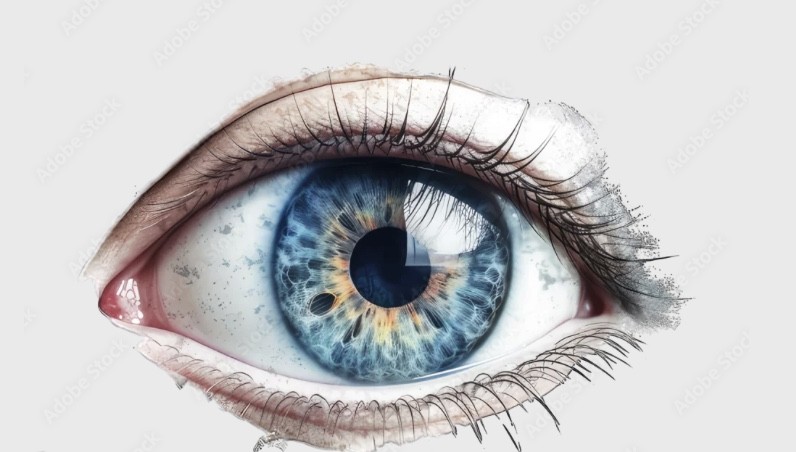
I must add that there’s a bias in favor of blue-eyed white folk in American culture. Pale white people are thought of as special — wiser, more perfect — and I’m not sure why. Maybe it’s because we’ve been influenced by the faces of white angels and cherubs we see in classical art. For most of us, white skin seems to personify perfection. In romantic novels, many heroic characters have attractive blue eyes, while the brown-eyed are more common and earthbound, like me.
I was close to a Mexican family when I lived in San Diego. It surprised me to learn how much they valued their pale child over the others. Watching that preference play out, I learned how much they had been influenced by a bias we have taught the world, that whites deserve preferential treatment.
Colors must have a greater influence on us than we think. While we find the pale blue-eyed most beautiful, our culture has been deeply touched through history by many brilliant dark people — the Egyptians, for example, or Semitic desert folk like Jesus and Mohammad, prophets who flourished in hot landscapes where the people had dark skin and brown eyes.
My husband’s eyes are blue, a light sparkly blue that makes him look angelic. He wears thick glasses that add to the image of wisdom and gentility. Because I come from a brown-eyed family, his blue eyes seem special to me. Happily, he lives up to that image, most of the time.
Still, dark-eyed Black artists, singers especially, have captivated audiences over the world. Their beautiful faces bring diversity to our vision of humanity. I’m partial to the dark actors of color who are at last everywhere in our televised shows. They lead the way to a more exciting way of seeing ourselves. I think television has taken us further in acceptance of different kinds of beauty.
There is danger in assumptions based on superficial physical characteristics like eye color. Our President embodies our blue-eyed bias. He adds his height and loud voice to the picture and becomes the ideal man, the perfect American. Crowds have accepted and adored his white face and blue eyes, but I find that preference disturbing. His face hides a foolish self-importance that is not heroic, but boastful and crude.
We seem to be influenced more by facial characteristics than we’d like to admit. The challenge is to look beyond superficial appearances and choose our partners, our friends and leaders with the insights of wisdom.
Elaine Jordan, author of Mrs. Ogg Played the Harp, is a local editor who’s lived in Prescott for thirty years.


