
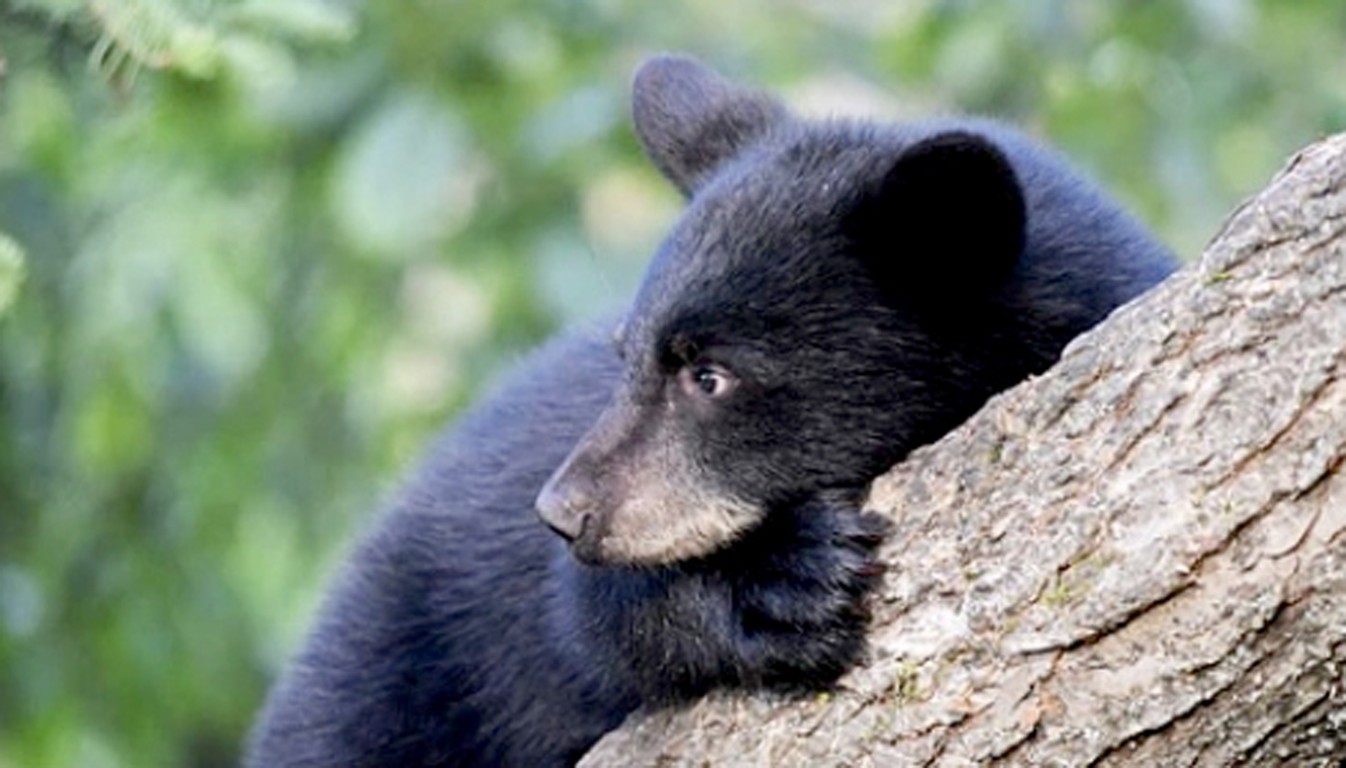
Wild bears have been visiting here in Prescott. They’ve been seen wandering in their natural habitats as well as our urban areas. I understand that the drought is a factor as well as unchecked development and wildfires. It seems we must live beside bears and respect their searches while we try to calmly deal with their huge presence. Bears have entered my consciousness today bidden by those sightings and my reading.
It’s not usual for us to find a bear here in town, of course. They are creatures from beyond our landscaped world. Even if they appeal to some of us, with their furred bodies and lumbering ways, they are not like our cunning toy bears, but are wild animals trying to live in a diminishing forest.
The novel Dark Wood, Blue Sky is about a man who becomes a bear when he chooses. Deep in the Alaskan wilderness, a young woman, working in a visitors’ lodge there, falls in love with him when he appears in human form. That novel brought me to ponder bears this morning. The ending, as you might guess, is unhappy.
Why stories of bears and not, say, giraffes? It seems that bears carry our fears. They are scary, dominating, and part of an unknown world we barely understand, no pun intended. Tales of bears are titillating to children and can be seductive to all readers and viewers.
The wild bears of Yellowstone National Park fascinate visitors. In a televised documentary about those bears and their human followers, we witness the huge mother bears as they leave their winter dens, often with cubs. Crowds of tourists gather with cameras to stare at them and record their movements. Some follow their favorite bear each year, especially Bear 399, a cautious mother, so dangerous and alive in the distance.
399 emerges slowly, her dark form rising out of stillness. She comes into view like a creature from another universe. The whole pageant is part of our absorption with the natural world and an environment other than our familiar one. We need to see what’s out there, alive and intriguing. So we wait and watch.
Then there’s Pooh, a character in British literature who wanders the Hundred Acre Wood with his friends. He comforts them with sayings like: “You’re braver than you believe . . . and smarter than you think.” He cheers little Piglet with, “Sometimes the smallest things take up the most room in your heart.” He’s a simple, wise soul, unpretentious and foolish at times, a lover of honey.
Another bear who delights children is called Paddington. He’s discovered by the Brown family in Paddington Station, London, sitting on a suitcase with a note attached to his coat: “Please look after this bear.” He’d arrived by lifeboat as a stowaway from Peru, sent by his aunt Lucy.
The story “Masha and the Bear” is a classic Russian folktale about a clever little girl who gets lost in the woods and outsmarts a giant bear to find her way home. It’s a traditional tale and available, I find, on telecasts and in storybooks.
Goldilocks and her three bears inhabit another children’s story much like that Russian one. It seems the contrast between the small girl and the huge wild bear comforts readers because sweet goodness overcomes gruff power. In those tales the child is winsome and pale, but it’s time for a story about a beautiful innocent child of color who tames a wild bear with her courage and innocence.
Bears are adored in toy likenesses too, of course, including Teddy, the stuffed bear named for Teddy Roosevelt, our American favorite. I’m inspired, as I write this, to go shopping and find a Teddy bear of my own. My parents were not given to stuffed animals.
We’ve chosen Smokey the Bear as our symbol of caution to remind us that our forests are precious and deserve our special care as we set off into wilderness. Smokey warns us against careless maintenance of campfires, saying, “Only you can prevent forest fires.” It takes a brown bear to make us heed that warning.
Bears in captivity are the saddest. I saw a brown bear at the San Diego Zoo and hope never to see one again. I trust by now she’s been returned to her natural home, but I don’t know. Bears are highly intelligent, and people who study them have been able to see to their release in many countries. There are videos available that document that work. My hope is that all zoos have given up displaying wild creatures and have turned to studying them.
Because I love the theatre, I’ve not forgotten that in one of Shakespeare’s plays the stage direction that has most baffled directors, and me, is “Exit, pursued by a bear.”
Elaine Jordan, author of Mrs. Ogg Played the Harp, is a local editor who’s lived in Prescott for thirty years.


