
I HAVE THE ADVANTAGE of distance from the crowded, busy, frantic world because I’m old. I sit here viewing crises and quandaries from the safety of my study. I see those messes, and I worry, because there is anxiety, struggle and suffering beyond my window. Yet I feel apart from most of it because I’m here, at home, untethered to all that.
Still, I’m indebted to the investigative journalists who inform and keep me alive to the world. I’m grateful to you who march for sanity and peace, despite fearsome reports on the news. I bless you every day. However, there’s another cohort whom I choose to honor this morning: the artists. When they look at the world’s miseries with their honest gaze, they turn to music, to clay and color, or motion and poetry, responding to bitter reality with beauty.
Why do they bother? Can sparks of beauty provide a hedge against the truth of the world’s struggles? I think it can, or I choose to believe so. We can live as if matters are hopeless, or we can weave meaning from it all. Artists probably have little choice but to create meaning. Their way of being in the world is to take elements from the earth, motion and sound, and respond to the life around them. Their motivation must come from some inner need to make lemonade out of the world’s lemons.
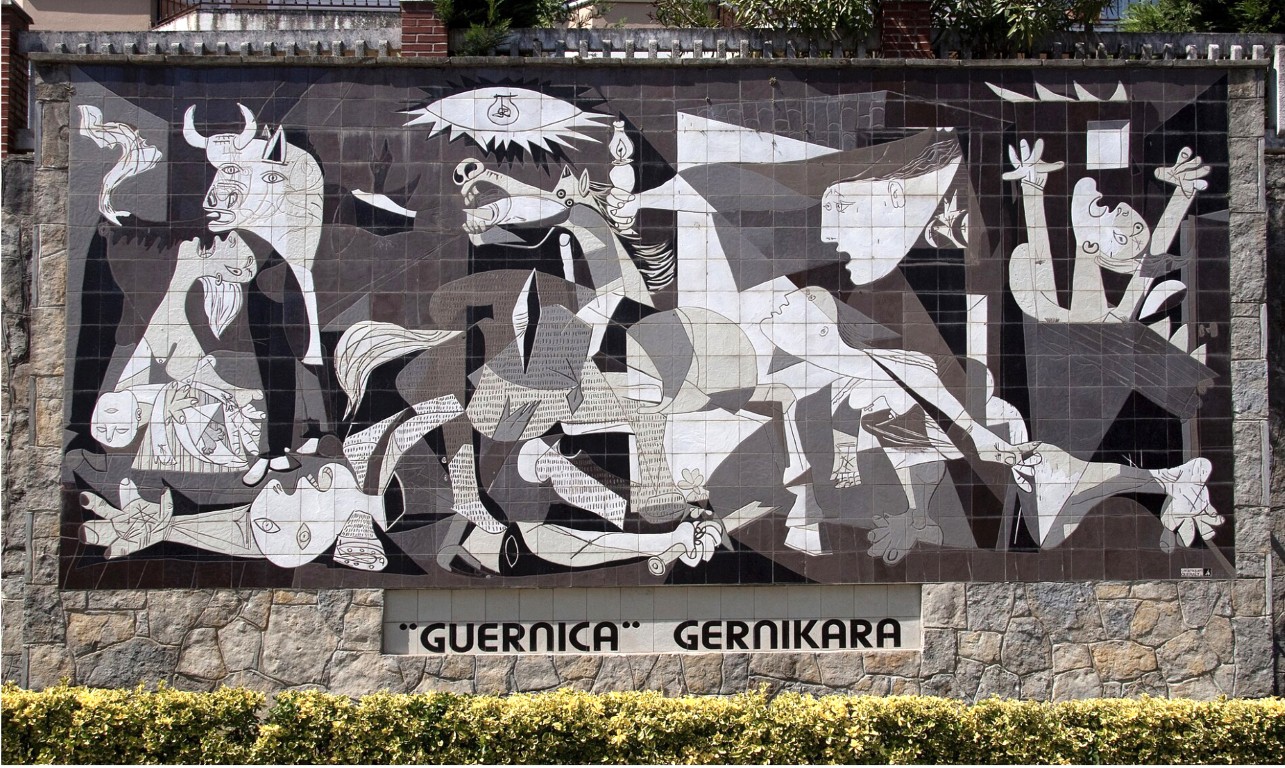
Artists can’t avoid the truth of our lives. They know it, and they care. Their response is their gift to us. To listen to a great requiem performance, for example, is to know that even death can inspire creation. During a terrible war in Spain, the massacre at Guernica inspired Picasso to put the faces, the blood and the wounds on canvas, a way of preserving the suffering for us to experience at the remove of time and place. We are made to know because there are artists who make us see, hear and understand.
Many of our artistic endeavors commenton our reality, its stupidities and its wonders. I think of Charles Shulz’s Peanuts cartoons as a swipe at our human efforts to be self-serving or important. The painting The Scream is a startling comment on the human condition. The sculptures of Michelangelo reveal an entire culture in his figures. Time stops in the hands of these artists. Poets, too, use the stuff of our plain lives, the words, to elevate and inspire us, or to shake us into visions of truth.
The artistry in beautiful buildings is a way of taking care of us with more than shelter. I love the charming plazas of Mexican communities and the rooms of a Greene and Greene home. I used to drive by a modern home by Richard Neutra just to gaze at its intriguing forms. The sight lifted my spirits. “Art is the highest form of hope,” the artist Gerhard Richter wrote.
That’s one of the gifts of artists — reminding us that the real world is full of wonder and beauty. Their talents have transformed dirt and sound and random color into pictures and places and poems. Some of us dance, turning our bodies into visual instruments that remind us that we are more than flesh, but capable of beauty as we turn. We can hope where there is light and fun around us. We can even believe in a compassionate community that will one day be available to all.
My favorite art form is drama — plays and films created for television or for our theatres. I want to be lifted out of my life as an old lady in Arizona to another place, where there is sacrifice, romance, horror and redemption. Those stories might tell of the heroism of the Band of Brothers or the struggles of the folk who live in Willa Cather’s Nebraska. I love all of it. The dramatic imagination of the artists who devised those stories is important to my sanity.
A choir concert can send me far away into another realm, too. Our Performing Arts Theatre at Yavapai College is a venue where we can hear Handel’s Messiah or watch The Sound of Music and experience exciting, life-changing moments. Artistic works like those, as well as concerts by the Chamber Singers and the Arizona Philharmonic, take us beyond ordinary experience. That transformation is a sacred movement of the spirit.
Back in my day, as we older folk like to say, we were taught folk songs and dances in our elementary-school classrooms. We sang songs at our desks, and we did the Virginia Reel on the playground. Somehow it was important that we had music and dance in our lives as well as spelling. I think that nod to the arts at school made us aware of possibilities beyond the limits of our familiar lives. We children were introduced to American song and dance because they matter.
My childhood was a long time ago.
Elaine Jordan, author of Mrs. Ogg Played the Harp, is a local editor who’s lived in Prescott for thirty years.


