

When we look at our own lineage, most of us carry a complex mix of pride, indifference and horror. We love the stories of resilience, but recoil at the shadows. For me this became clear only in my later years. Here is how I journaled it during my discoveries.
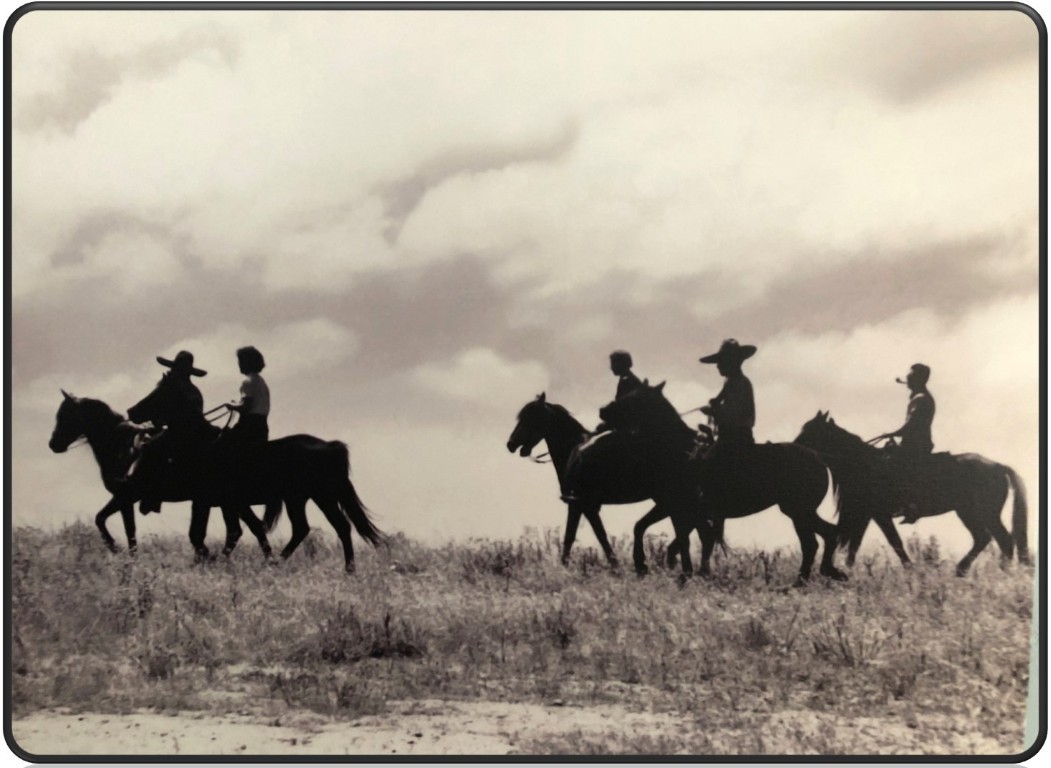
I turn to face the dawning of my Elderhood from a desert mountaintop … child of this land — and see in hazy distances the columns of dust, hear hoofbeats, clanking metal, see/feel like blood in my veins, the ancient ones of my lineage. It isn’t only the strong indigenous with whom I feel most kinship, nor weathered, sturdy mestizos whose villages I’ve known and loved, but no, it is Conquistadors who ride toward me from shadows of my family's past.
I battle Janus-faces: shame and fascination, the need to honor my ancestors, the disbelief at the atrocities that are their testament passed down to today. I feel my confused childhood shame at being Mexican, (“No!” My father’s voice echoes in a classic command of colonial mentality, “You are not Mexican – you are Spanish!”). My adult-self, always seeking to touch a side of me that, mostly fatherless, I barely knew. Through it all, a long-ago dream offers a deeper truth; visions of being held by mother/father, grandparents, greats and greaters in lines of those still further back, holding each generation’s child until all are holding me, looking across, not down to me, but smiling, with forgiveness and love, into each other’s timeless eyes.
In the The Odyssey Ulysses went into the shadow world and met with the spirits of the dead, many of whom he had known while living. But before he could communicate with them, he had to make a blood offering, for only a sip of that essence of life could give them the capacity to answer his questions. Perhaps, in these days, the way of giving voice to those who have passed on is in the memory of us, the living. That is our blood offering; the action of remembering gives our ancestors life, so they may communicate with us.
I am learning for the first time the ancient tradition of ancestor-honoring, and in this odyssey perhaps will find the “peace that passes understanding,” a love and acceptance of what is … a meditated journeying past judgment, shame, and through an understanding and compassion of their times, a growing understanding and compassion for my own.
The hero’s journey, the immigrant journey, the journey toward acceptance by “the tribe,” the need for family, the conscious turning toward Self and embracing Other … these are the lofty goals that make my story not-unique and worth the telling. This story, not mine alone, past and present juxtaposed, begins, ends, comes full circle and starts anew with each generation. Does it matter that one knows one’s heritage? I would have said ‘no’ till I grappled with my own.
In what ways can I, in this age, make reparation for the actions of my ancestors? Is it the right thing to do? Simultaneously with the asking, I can do more than sit quietly: I can strive to stop the violence and oppression, starting within myself and spreading into my society. I can do what is within my ability to balance the scales of privilege and disadvantage. I can take a stand for equality, compassion, acceptance. I can question the motives and actions of my ancestors, as well as of myself, even while learning of their values at the time; not to exonerate them, but to recognize that, in many ways both just and unjust, they are not so different from me.
In modern Western society we live in a culture of historical amnesia. We prize individual autonomy and look toward the shiny horizon of progress, often severing our ties with the roots that feed us. We treat the long-dead as static figures locked in dusty archives or closed family albums. Yet, around the world, indigenous and traditional cultures have long understood that we do not walk this earth alone. In these traditions, ancestors are active, present and revered. Offerings of food, drink, marigolds and song are set on altars not out of blind worship, but out of a profound recognition of intergenerational continuity. To remember them is to keep the circle intact.
When we begin the work of lineage reflection, however, we inevitably encounter the unsavory — the conquerors, the abusers, the silent bystanders, the broken who broke others. It’s easy to honor a hero. It demands a far deeper spiritual maturity to face the oppressor whose blood flows in our veins.
This is where the profound concept of healing backward and forward through time begins. Time, in the realm of spirit and memory, is not a strict, linear progression. When we become aware of inherited patterns — the unaddressed grief, the internalized shame, the reflex toward dominance or fear — we gain the power to break the cycle. By cultivating forgiveness and compassion today, we send a ripple backward into the ancestral line, offering peace to those who were bound by the prejudices and survival conditions of their eras. At the same time we heal forward, ensuring that the inheritance we pass to future generations is cleansed of ancient toxins.
As autumn approaches and the veil between worlds thins toward November’s Día de los Muertos, we are invited to set a table for all who came before us. Honoring our ancestors does not mean romanticizing their faults or condoning their cruelty. It means having the courage to invite them into the light of our awareness, extending the blood offering of our memory, and choosing to transform their shadows into our wisdom.


