In September I shared the complicated shadow-side of lineage in “Honoring My Unsavory Ancestors.” Acknowledging the conquistadors, the silent bystanders and the historical pain carried in our veins, I sought a spiritual maturity that heals both backward and forward through time. This month I hope to bring that exploration full circle as we step out of the shadowy corridors of judgment and into the radiant, communal light of Día de los Muertos.
While modern Western culture often treats death with hushed tones, sterile avoidance or melancholic grief, the Mesoamerican tradition upends this narrative entirely. The underlying truth of the holiday is beautifully paradoxical: it isn’t a grim preoccupation with dying; it is a triumphant, creative celebration of living. It is a bold declaration that those who have crossed over remain vibrant, active members of our extended families — staying alive as long as we have the love and courage to carry their stories.
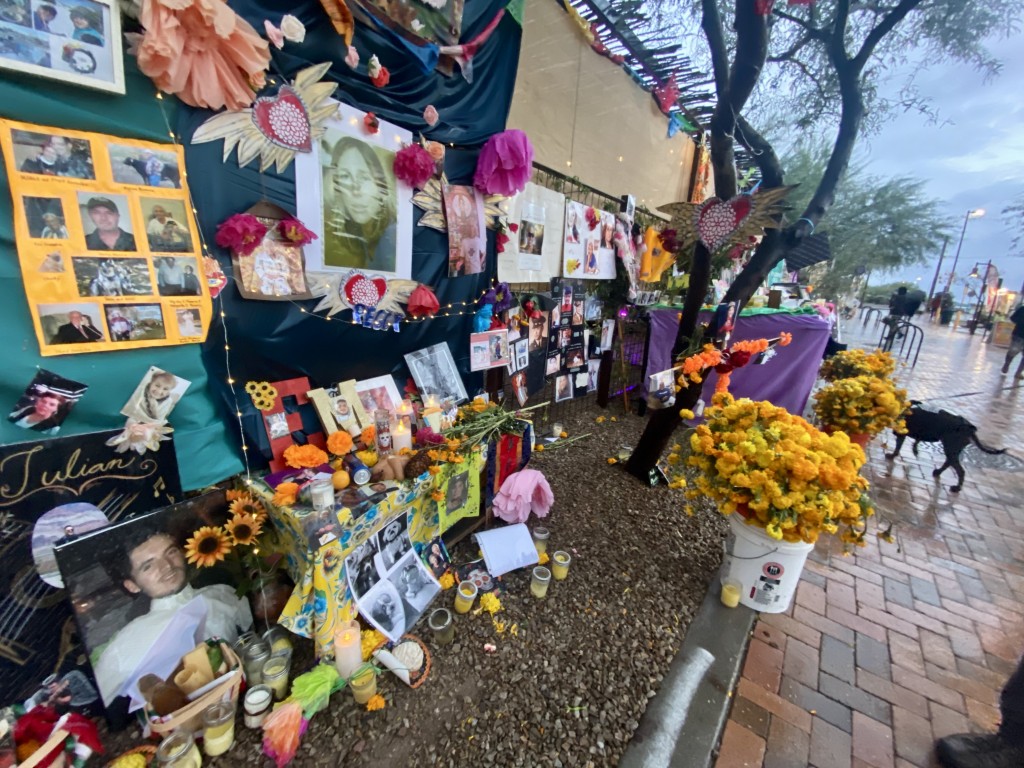
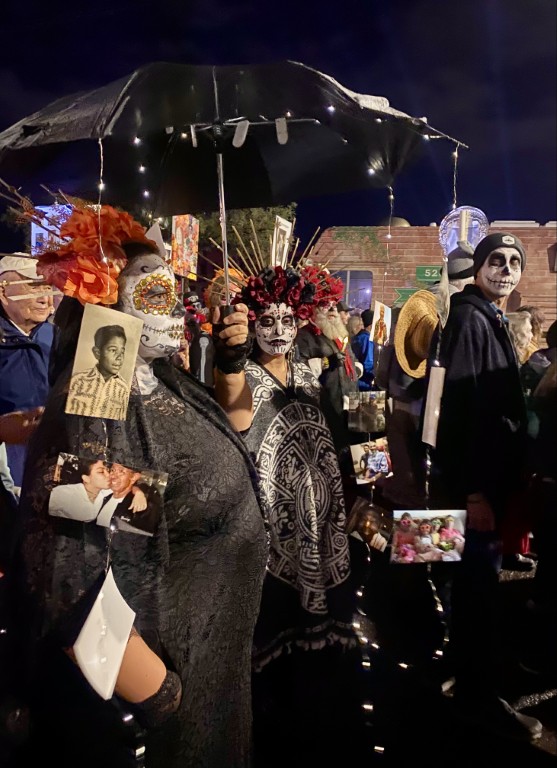
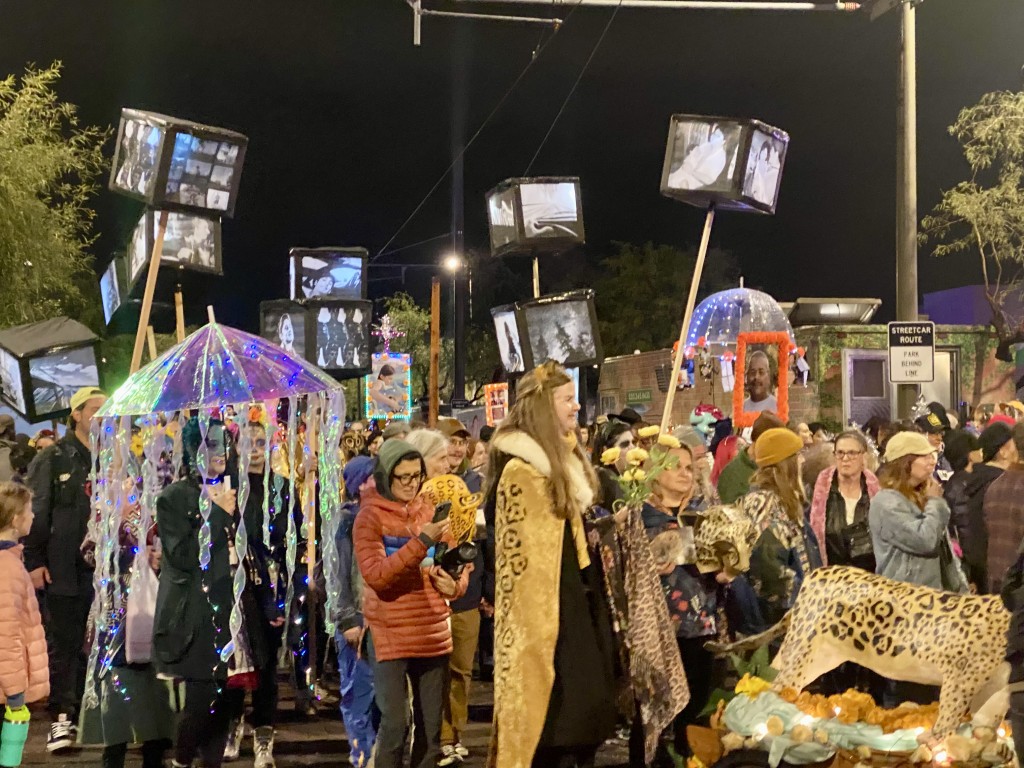
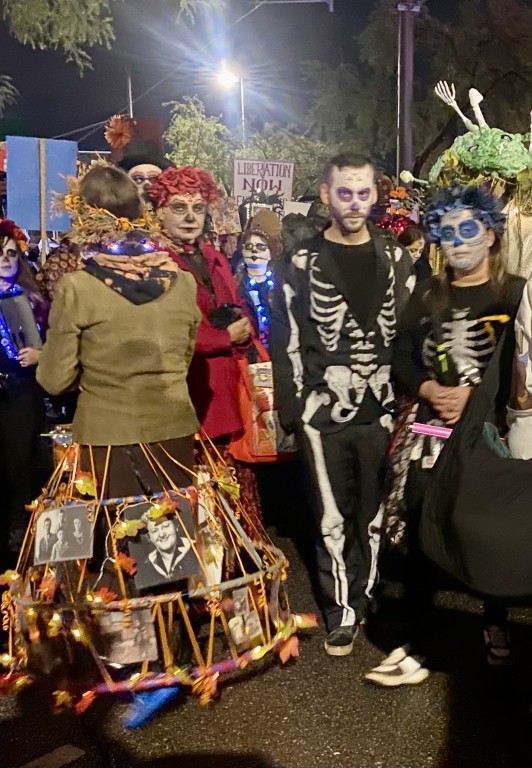
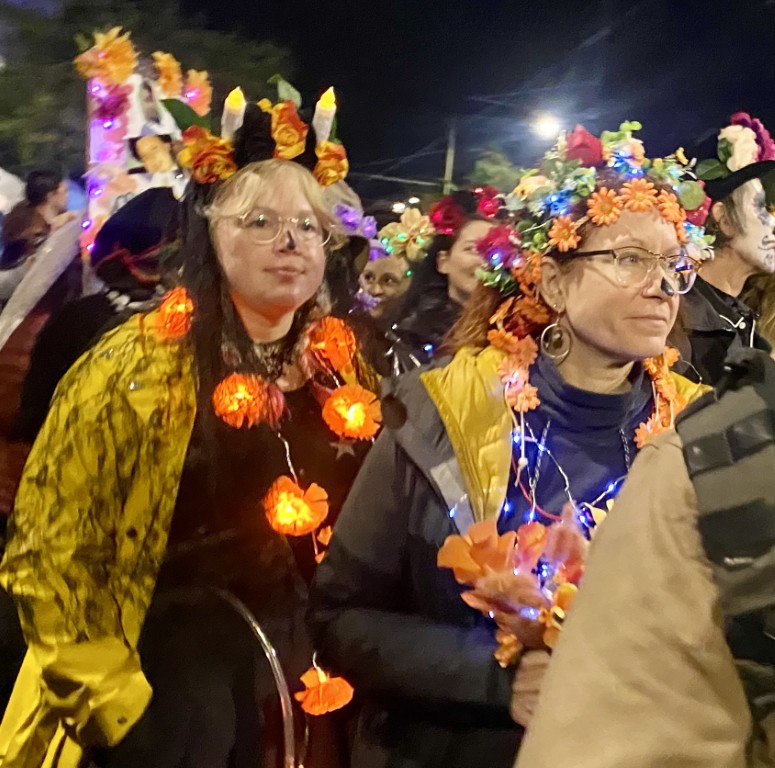
I felt this truth acutely as I stood on the pavement at Tucson’s annual All Souls Procession a year ago. Transfixed, I watched as hundreds of people and rolling, handcrafted memorials moved past in a glowing night parade of music, song and gorgeously bedecked forms. The sheer grassroots ingenuity of the living was breathtaking: humble Radio Flyer wagons transformed with ruffled crepe paper, battery-powered twinkling lights, pan de muerto and framed photographs of mothers, grandfathers, friends and beloved pets. Gazing into the flickering candlelight, I thought: This is how we honor the ancestors.
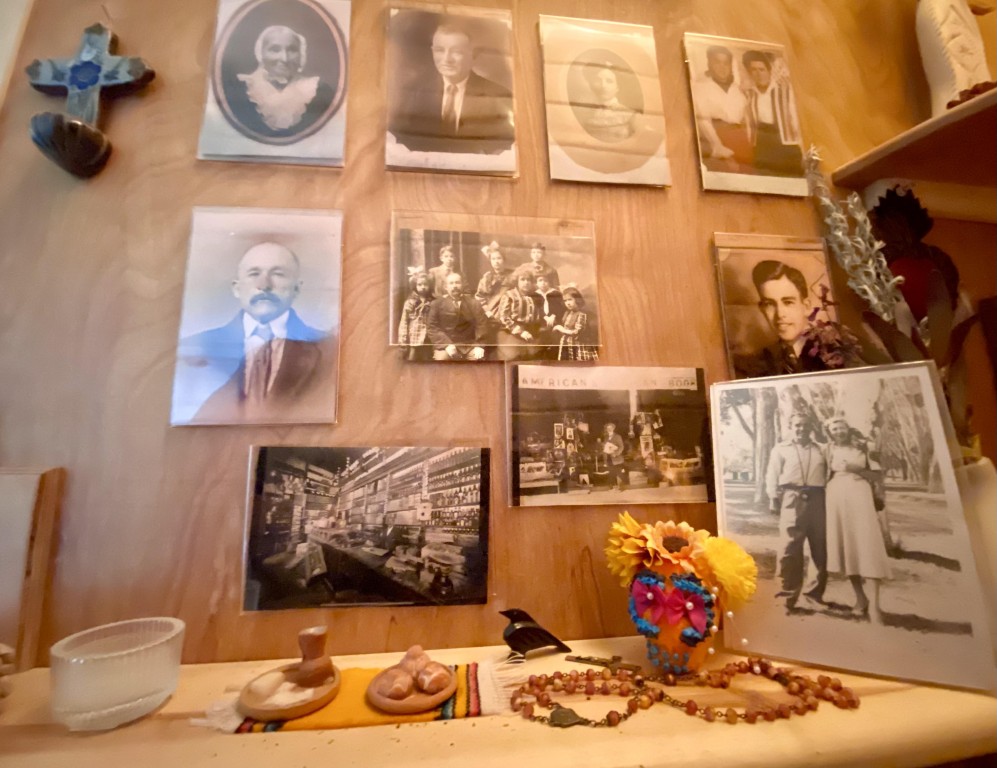
This living bridge between worlds is rendered with profound elegance in Pixar’s masterpiece Coco. The film offers a gentle, beautiful window into the heart of Mesoamerican belief. Central to this tradition is the ofrenda (altar) — not a monument to loss, but an invitation. When young Miguel gazes at his family’s altar, it’s ablaze with bright orange marigolds whose vivid petals and potent scent are believed to guide spirits back home. Glowing candles and laid-out favorite foods — sweet bread, tamales, a splash of mezcal — signal to the departed that they are expected, cherished and welcomed back to the family table. The dead are lured home not by our sorrow, but by our warmth, beauty and joy. At the film’s end Miguel sings, “Ay mi familia, Oye mi gente, Canten a coro, let it be known: Our love for each other will live on forever, in every beat of my proud corazón!”
The emotional core of Coco reveals an even deeper spiritual thesis: the concept of the Final Death. In the film a spirit named Chicharrón vanishes entirely from the Land of the Dead because no one left in the living world remembers his name or tells his story. Hector’s desperate struggle to get his photo placed on an ofrenda isn't driven by vanity, it’s a matter of soul survival. The message is unmistakable: remembering, honoring, is an active, vital responsibility of the living. Our memories are the fuel that keeps our ancestors’ spirits alive in the unseen realms.
This impulse to gather, remember, and celebrate across the threshold of death is not unique to Mesoamerica. Around the globe, human cultures have long carved out sacred time to bridge the visible and invisible worlds. In Asian traditions, such as the Hungry Ghost Festival or Japan’s oBon, families light lanterns to guide ancestral spirits back for annual family reunions. In Gaelic tradition the ancient festival of Samhain marked the thinning of the veil between seasons and worlds, where hearth fires were kept burning to welcome friendly spirits home. Whatever the geography, the human heart craves a way to say “You are not forgotten. You are still part of us.”
For me this is a personal reckoning, a mandate to do the hard inner work required to learn about, grapple with and ultimately honor my ancestry. But we don’t have to travel to distant lands or major metropolitan centers to practice this creative act of love. We can do it at home, alone and with our families. Right here in Yavapai County, our local communities offer rich opportunities to step into this shared tradition.
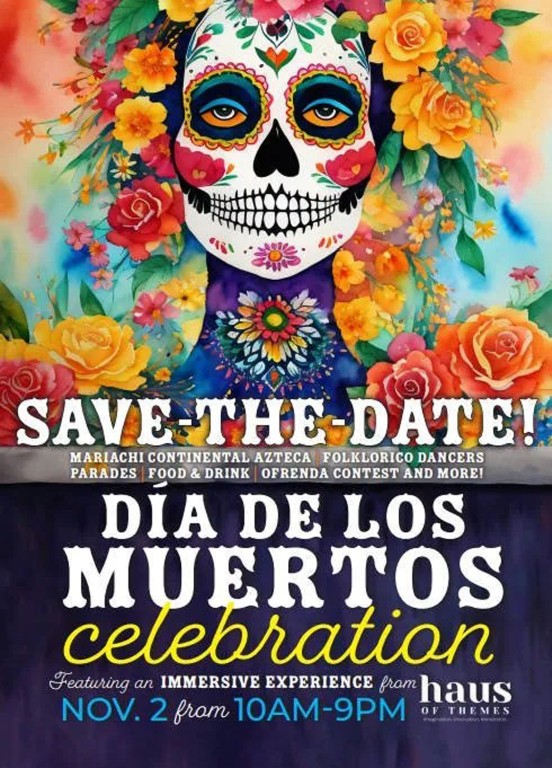
At Prescott Valley Town Center on November 7 the plaza is transformed into an immersive homage to Mexican heritage.
Wandering through the glowing displays, community ofrendas and vibrant marigold installations, one feels the palpable warmth of collective remembrance. In Prescott on Sunday October 25 the Museum of Indigenous People transforms its historic Pueblo to house community-crafted ofrendas dedicated to departed loved ones, and features musical performances, cultural dancers and guided community walks to historic Citizens Cemetery next door. Check local event calendars for access to these and other events.
As autumn deepens and the air turns crisp, let’s participate in these rich traditions. Gather your family photos. Light a candle. Set out a favorite food or a small bouquet of golden blossoms. Whether you join a local community gathering or simply pause at a quiet home altar, remember that keeping our ancestors alive isn't a chore of grief — it is a creative, joyful, and deeply healing act of love.